5 Steps How to Handle Water Damage Cleanup and Stop Secondary Damage (Easy Guide for Homeowners)
Category: Restoration Tips
The Absolute Fastest Path to a Dry Home: Stop Water Damage Instantly and Save Your Sanity
Are you currently standing in an inch of water, wondering if your home will ever feel normal again?
It is one of the most stressful experiences a homeowner can face. One minute, everything is fine: the next, a pipe bursts, or a storm rolls through, and your sanctuary is under siege. We understand the panic. We know the feeling of watching your hard-earned property soak up water like a sponge.
But here is the good news: you are not alone, and this is entirely manageable. Handling a disaster should feel like an organized recovery: not a chaotic scramble. At Rapid Refurb, we specialize in turning that chaos into a clear, step-by-step path toward restoration.
The secret to saving your home isn’t just hard work; it’s speed. Secondary damage: like mold, structural rot, and warped flooring: doesn't wait for a convenient time to start. It begins the moment the water touches your floor. This guide is your roadmap to taking control, protecting your family, and ensuring your home comes back better than ever.
Step 1: Safety First: Stop the Flow and Kill the Power
Before you grab a single towel, you must ensure the environment is safe. Water and electricity are a deadly combination. If you can reach your breaker box without stepping through water, turn off the power to the affected areas immediately. If the water is near outlets or your electrical panel and you can't reach it safely: stay out. Period.
Next, you need to stop the bleeding. If the water is coming from a burst pipe or a leaking appliance, find the main water shut-off valve and turn it clockwise until it stops.
Pro Tip: If the water is coming from a "black water" source: like a sewage backup or outdoor flooding: do not attempt a DIY cleanup. This water contains pathogens that require professional-grade protective gear.
Cleaning up should feel like a safe, controlled process: not a gamble with your health. If you are unsure about the safety of your home's structure, such as seeing sagging ceilings or buckled walls, exit the premises and call us immediately. Speed is your best friend, but safety is your soulmate.

Step 2: The 24-Hour Rule: Document and Call Your Insurer
Once the water has stopped and the area is safe, the clock starts ticking. We call this the "24-Hour Rule." What you do in the first day determines how smoothly your insurance claim and restoration will go.
Before you move a single piece of furniture, take photos and videos. Document every wet corner, every damaged rug, and the height of the water line on the walls. This evidence is gold when navigating insurance adjusters. You want your claim to feel like a factual report: not a guessing game.
For deep insights into what your insurance company might not be telling you, check out our guide on insurance secrets revealed for water damage restoration claims.
Once documented, call your insurance provider. Tell them you have an active water loss. However, do not wait for an adjuster to arrive before starting the mitigation. Most policies require you to take "reasonable steps" to prevent further damage. This is where we come in. Professional water damage restoration starts with stopping the spread, and we can help you navigate those early conversations with your carrier to ensure you get the coverage you deserve.
Step 3: Extraction: Get the Liquid Out Fast
The longer water sits, the deeper it seeps into your subfloors and wall studs. Standing water is the primary fuel for secondary damage. If the spill is small and clean, a wet/dry shop vacuum can do wonders. But for anything more than a minor puddle, household tools simply won't cut it.
At Rapid Refurb, we use industrial-strength submersible pumps and high-capacity extractors that pull water out of carpet padding and hardwood crevices that a shop vac can't even reach.
Why is this so critical? Because water travels. It follows the path of least resistance, often migrating behind baseboards and under cabinets where you can't see it. This is why speed is your best friend after a pipe burst. Removing the bulk of the water immediately reduces the humidity levels in the house, which slows down the clock on mold growth.

Step 4: Dry and Dehumidify: Stopping Secondary Damage
This is the stage where most homeowners make a mistake. They think that because the floor "feels" dry, the job is done. Unfortunately, moisture hides in the dark, still places: inside your walls, under your laminate, and in your insulation.
To truly stop secondary damage, you need to manage the "science of drying." This involves:
High-velocity air movers: These aren't your average floor fans. They are designed to create a vortex of air that pulls moisture off surfaces.
LGR Dehumidifiers: Low Grain Refrigerant dehumidifiers pull moisture out of the air, even in cool environments, preventing that "musty" smell from ever taking hold.
Moisture Meters: We use specialized sensors to detect moisture levels behind drywall without tearing the whole wall down.
If you don't dry these hidden areas, you are essentially inviting mold to move in. Mold remediation is a much more intensive process than simple drying. To avoid the headache, read up on 7 mistakes you’re making with mold remediation to see why professional-grade drying is non-negotiable.
Step 5: Sanitize and Restore: The Path to New Beginnings
Once the moisture levels are back to normal, it’s time to clean and disinfect. Water: especially from pipes or storms: can carry bacteria. We use hospital-grade, family-safe disinfectants to treat every affected surface.
This is also the moment where we transition from "mitigation" to "reconstruction." Some materials, like heavily soaked carpet padding or swollen particleboard, simply cannot be saved. They must be removed and replaced.
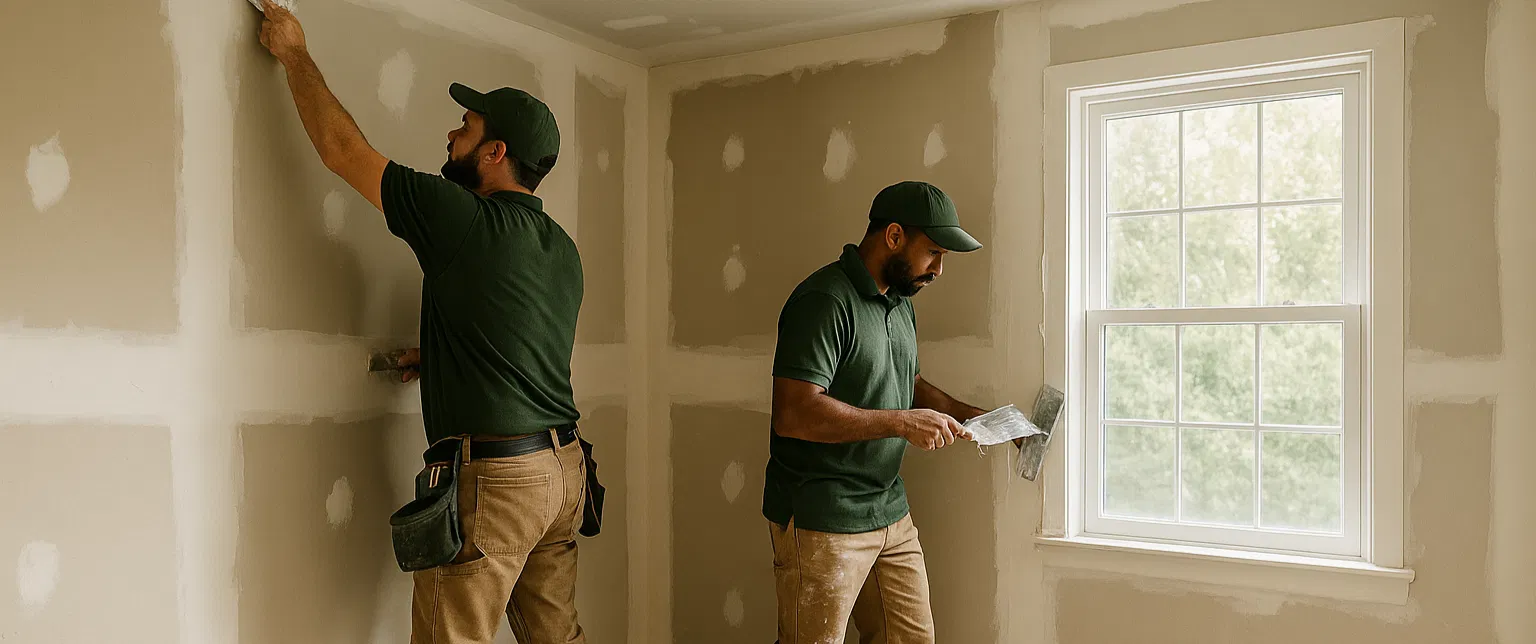
Restoring your home should feel like an upgrade: not just a patch job. Whether it’s fast-track home reconstruction or simply getting your drywall back to a smooth, paint-ready finish, our team ensures the final result is seamless. We don’t just "fix" things; we rebuild them with the quality and care your family deserves.
Why Speed and Professionalism Matter
You might be tempted to handle the entire process yourself with a few fans and a mop. While we admire the DIY spirit, water damage is deceptive. What looks like a dry wall today can be a mold colony in two weeks.
Choosing a professional restoration company means you are buying peace of mind. It’s the difference between wondering if your home is rotting from the inside out and knowing it is clean, dry, and safe.
If you are currently facing a restoration project, choosing the right partner is key. Check out our guide on how to choose the best residential reconstruction company to understand what sets a quality contractor apart from the rest.
You’ve Got This: And We’ve Got You
A water leak is a detour, not a dead end. By following these five steps: Safety, Documentation, Extraction, Drying, and Sanitization: you are taking the most effective actions possible to save your property.
Remember, the goal isn't just to get the water out. The goal is to get your life back to normal as quickly and efficiently as possible. We are here to provide the heavy lifting, the technical expertise, and the reassuring hand you need during a tough time.
Stay calm, act fast, and let’s get your home back to the sanctuary it’s meant to be.
Need immediate help with water damage or mold remediation? Contact Rapid Refurb Today


Comments